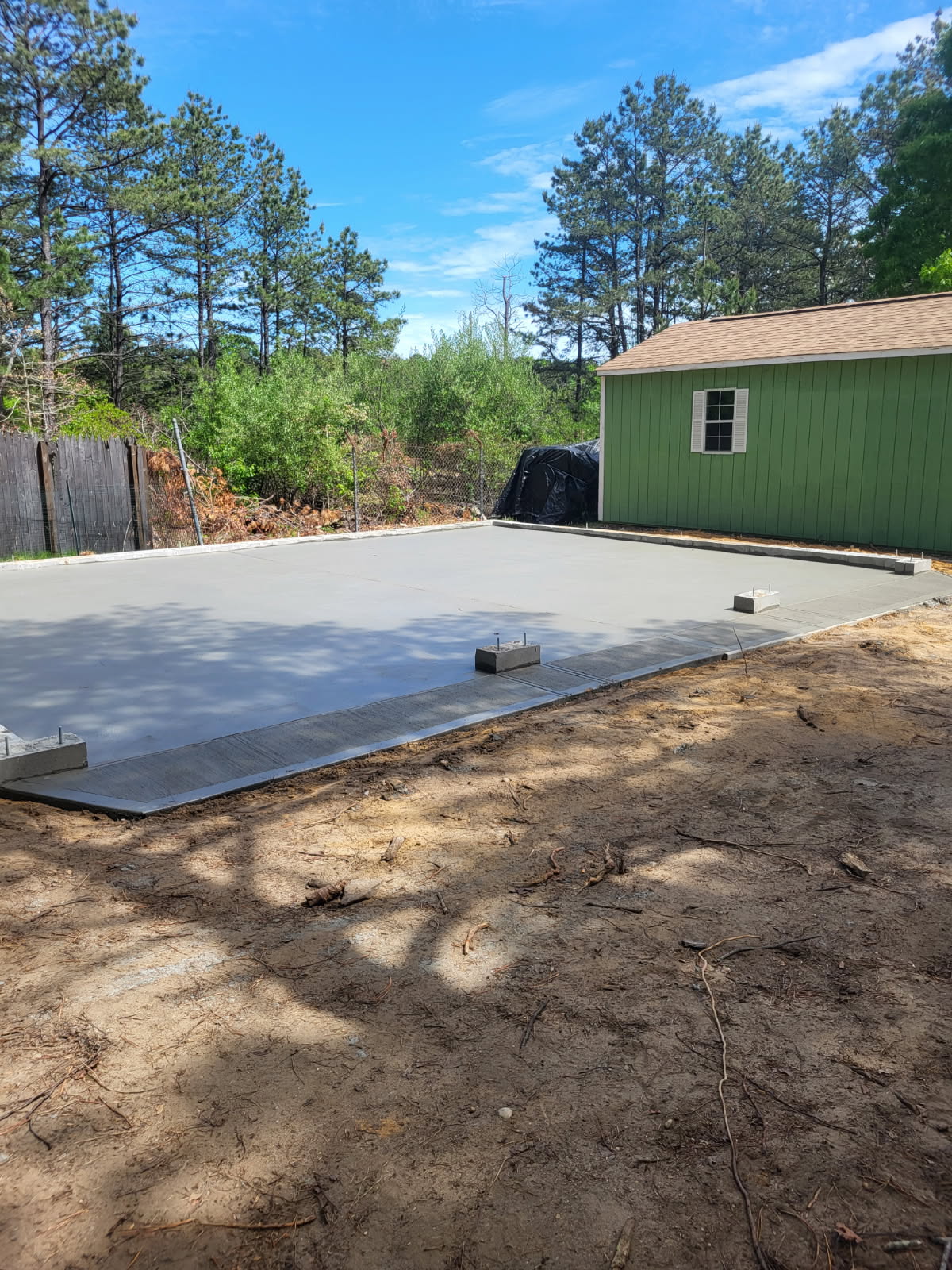
Slabs, footings, foundations and pads all start the same way: good excavation, a compacted base and drainage planned in from the start. On Long Island, freeze-thaw cycles and water are what break concrete down, so the prep underneath matters as much as the pour.
Concrete slabs and garage floors
A slab is a flat concrete surface poured on a prepared base. Garage floors, shed bases, patios and utility areas are all slabs. A garage floor also needs to handle vehicle weight, hot tires and road salt dripping off cars all winter.
Control joints, the right thickness and a proper finish help a slab last. Our concrete driveways, patios and slabs service covers new slab work.
Footings and foundations
Footings are the wide concrete base that spreads the weight of a wall, column, addition or structure into the soil. Foundations sit on footings and carry the building above. On Long Island, footings need to sit below the frost line so freezing soil does not heave them.
Footings are also needed under masonry walls, columns and steps. Skipping them is one of the most common reasons small masonry projects crack.
Concrete pads
Pads support equipment such as air conditioning condensers, generators, hot tubs and trash enclosures. They need to be level, properly sized for what sits on them and sloped so water does not collect around the equipment.
Aprons, curbs and basement entrances
A driveway apron is the section that meets the street, and it takes the most abuse from plows and turning tires. Concrete curbs define edges and guide water. Basement entrances combine excavation, concrete walls and steps, and they must keep water out.
Belgian block is also a common choice for aprons and curbing; see our brick, block and stone masonry guide.
Repair or replace concrete?
Hairline cracks and isolated surface damage can often be repaired. Sunken sections, widespread spalling or cracks through the full thickness usually call for replacing the section. If the base underneath has failed, patching the top will not last.
Learn more on our concrete repairs service page and in our guide on fixing a cracked driveway. Removing old concrete is covered in our demolition and removal guide.
Maintenance on Long Island
Keep water moving away from slabs, go easy on de-icing salt and consider sealing exterior concrete. Catching cracks early keeps a small repair from becoming a replacement.
Talk to Andrew about your project
If you are planning a slab, footing or foundation anywhere in Suffolk or Nassau County, call Andrew at (631) 974-5285 or email fortebrickandconcrete@hotmail.com. Forte Brick and Concrete is family owned, every job is handled start to finish, and Andrew is on every job. Ask about the Senior Citizen Discount, or request a free quote online.
Frequently asked questions
Why do footings need to go below the frost line?
Soil that freezes can expand and lift whatever sits on it. Setting footings below frost depth keeps walls, columns and steps from heaving.
Can a cracked garage floor be repaired?
Often, yes, if the cracks are isolated and the slab is stable. Widespread damage or sinking usually points to replacement.
Does new concrete need sealing?
Sealing helps protect exterior concrete from water and de-icing salts, which is useful through Long Island winters.
Do you remove old concrete before pouring new?
Yes. Tear-out and preparation of the area is part of replacement work.