Brick, block and stone each do a different job. Block (CMU) is the structural workhorse, brick gives a classic finished face, and natural or cultured stone adds texture and character. Many Long Island projects combine them, such as a block core finished with brick or stone veneer.
Brickwork for Long Island homes
Brick has been a staple on Long Island for generations, from colonial facades to front stoops and garden walls. It holds up well to Northeast weather when it is laid with the right mortar and good joints, and it ages gracefully instead of looking dated.
Common brick projects include veneer and wainscot on foundations, entry walls, planters, steps and decorative details. See our brick and block masonry service for the kind of new work Forte handles.
Block work and CMU
Concrete masonry units, often called CMU or cinder block, form the backbone of many walls, foundations and structures. Block is strong, economical and quick to lay, and it can be left exposed, parged or faced with brick or stone.
On a lot of residential jobs block does the structural work you never see, while the finish material is what visitors notice.
Natural stone and cultured stone
Natural stone is quarried rock cut to size. Each piece is unique, and it is extremely durable. Cultured stone is a manufactured veneer that imitates stone at a lighter weight, which makes it practical for walls and surfaces that cannot carry full stone.
Both can look excellent. The right choice depends on the look you want, the surface it goes on and your budget. Our guide to stonework and cultured stone goes into more detail.
Cobblestone and Belgian block
Belgian block is a squared granite paver often used for driveway aprons, curbing and borders. Cobblestone is a rounder, more rustic look. Both are tough enough for vehicle traffic and help define edges along driveways and walkways.
They pair well with concrete and paver surfaces. Read more in our paver driveways and walkways guide.
Columns, mailbox columns and pillars
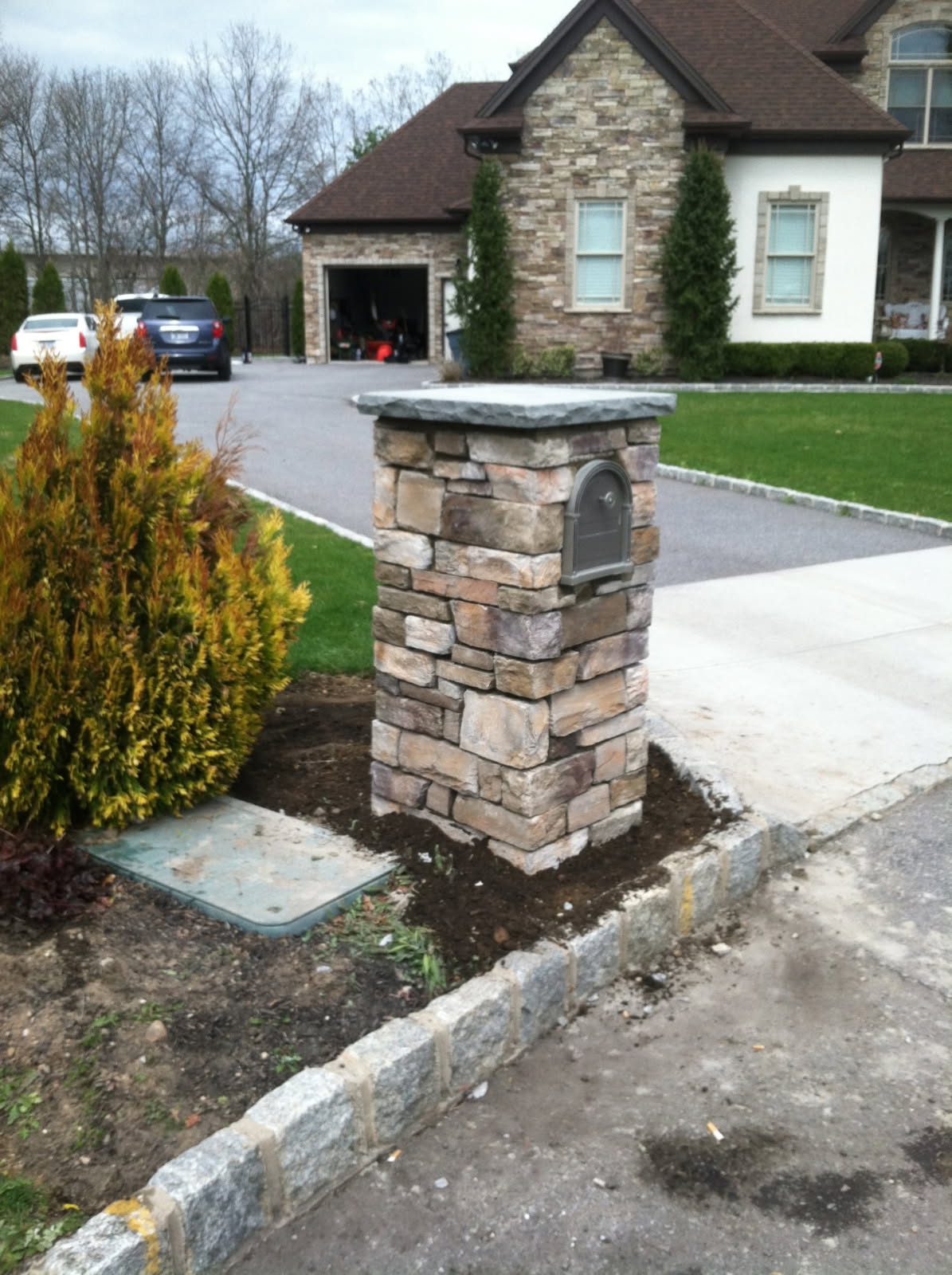
Brick and stone columns frame driveways, gates and entryways. Mailbox columns are one of the most popular small masonry projects on Long Island because they improve curb appeal and stand up to snowplows far better than a wooden post.
A good column needs a solid footing, a square, plumb build and a cap that sheds water so freeze-thaw cycles do not work into the top.
Walls, entryways and decorative masonry
Brick and stone walls, planters and entry features give a property structure and a finished look. Decorative masonry, such as soldier courses, contrasting borders and stone caps, adds detail without changing the whole facade.
For freestanding and retaining walls, see our retaining and garden walls guide.
Repair or build new?
Existing brick and stone can often be saved with repointing, replacing damaged units or resetting loose caps. When a wall is leaning, heavily cracked or failing at its base, rebuilding usually makes more sense. Our masonry repairs service covers the repair side.
Talk to Andrew about your project
If you are planning brick, block or stone masonry anywhere in Suffolk or Nassau County, call Andrew at (631) 974-5285 or email fortebrickandconcrete@hotmail.com. Forte Brick and Concrete is family owned, every job is handled start to finish, and Andrew is on every job. Ask about the Senior Citizen Discount, or request a free quote online.
Frequently asked questions
Is brick or stone better for a Long Island home?
Neither is better across the board. Brick suits classic styles and is consistent; stone gives more texture. Both hold up well when installed correctly with proper drainage and caps.
What is the difference between block and brick?
Block (CMU) is larger and mainly structural. Brick is smaller and usually used as the finished face. Many walls use a block core with a brick or stone veneer.
Can a mailbox column hold up to snowplows?
A masonry column on a proper footing is much more durable than a wood post, though no structure is immune to a direct hit.
Do you work in both Suffolk and Nassau County?
Yes. Forte Brick and Concrete serves homeowners across Suffolk and Nassau County.