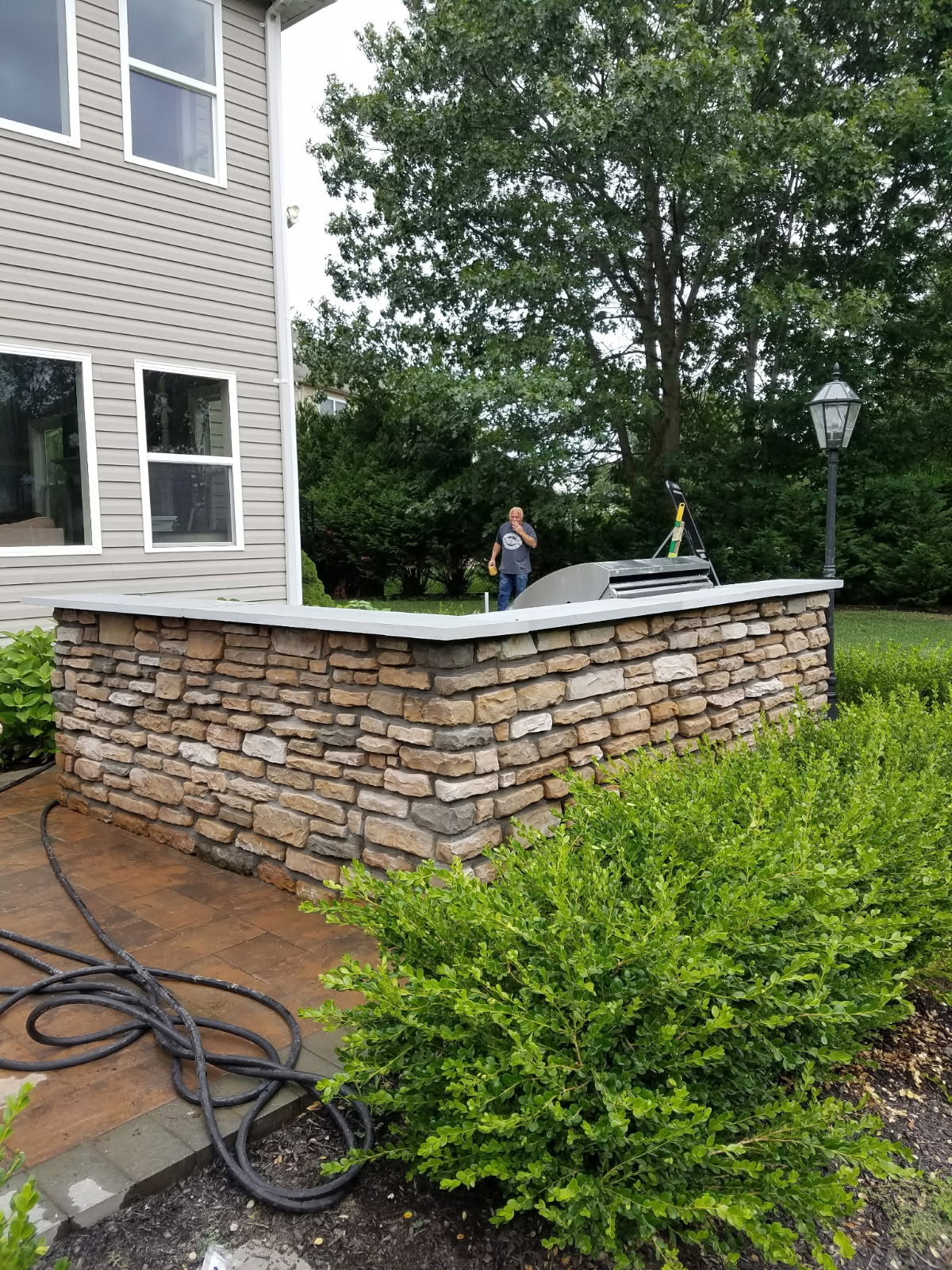
Yes. A built masonry outdoor fireplace is permitted work on Long Island. In the Town of Islip it needs a Building Permit for a Fireplace/Wood Coal Stove, plus a separate Plumbing/HVAC permit if it connects to gas. In Brookhaven, a fireplace, firepit or fixed outdoor BBQ is filed as an accessory structure.
Why a masonry fireplace is treated as a structure
A portable fire bowl you buy at a garden center is furniture. A fireplace built out of block, brick and stone, sitting on a footing, is a permanent structure on your property — and every town on Long Island treats permanent structures as permitted work.
That surprises people, because the fireplace is outside and nothing is attached to the house. The town still wants to know where it sits on your lot, how tall it is, and whether any gas line is running to it. The permit is also what protects you at resale, when a buyer's attorney asks for the certificate covering that structure.
The second thing homeowners rarely expect: gas pulls a separate permit. The masonry permit covers the structure. The gas connection is its own filing.
Town of Islip: what the permit list actually says
The Islip Building Division publishes a document called "When is a Permit Required?" and it is refreshingly direct. For a fireplace it lists a Building Permit – Fireplace / Wood Coal Stove, and adds a Plumbing/HVAC Permit if the unit is connected to gas. You can read it yourself at the Town of Islip Building Division permit list.
If the fireplace is part of a larger outdoor kitchen, the same sheet calls for a Building Permit – Accessory Structure for a built-in BBQ or outdoor kitchen, as opposed to a portable one, and again a Plumbing/HVAC permit for a gas BBQ or fire pit.
Two more Islip items that catch people on this kind of project. A patio more than 18 inches above grade needs a permit, and at 30 inches or more above grade it needs stamped plans from a registered design professional. And importing more than 10 cubic yards of fill requires an Engineering Land Grading Permit — which matters when you are building up a base for a patio and fireplace on a sloped yard.
Town of Brookhaven: the fireplace is named on the application
Brookhaven removes the guesswork. The Division of Building's own building permit application lists the accessory structures it covers, and the list includes Firepit, Fireplace, and Outdoor (fixed) BBQ/Kitchen, along with gazebos, pergolas and roof-overs.
The submission requirements are where homeowners stall. The application calls for two original to-scale surveys, signed and stamped by a surveyor and dated within one year; three sets of plans plus a digital PDF; Workers Compensation and Disability Insurance forms for the proposed work; HOA approval where it applies; and Planning Department, Historic District (HDAC) and DEP wetlands approvals where those apply.
The Division of Building is at One Independence Hill, Farmingville, NY 11738, 631-451-6333. If your survey is older than a year, start there — getting an updated survey is usually the longest lead time on the whole project.
What to gather, in order
Start with the survey. Find the most recent one you have and check the date. If it is more than a year old in Brookhaven, order a new one before you do anything else, because the plan set gets drawn on top of it.
Next, settle the location. Mark roughly where the fireplace will stand and how far it is from each property line, the house, the pool and any septic. That one measurement decides whether your project is straightforward or needs engineering.
Then the drawings and the paperwork — plan sets, insurance forms, and HOA approval if you are in a community that requires it. Last, the gas question: if you want a gas log set or a gas fire pit alongside the fireplace, flag it at the start so the plumbing filing moves in parallel instead of holding up the job.
Where it sits changes what it costs
Height above grade and distance from the line are the two variables that quietly turn a simple build into an engineered one. A fireplace on a flat yard well inside the setbacks is a different filing from the same fireplace on a terraced slope that needs a retaining wall behind it.
Islip, for example, requires a permit for retaining walls over 18 inches, and even walls at or under 18 inches need an Engineering site plan determination. If your design needs grade change to work, that wall is part of the application too. Our retaining and garden wall guide covers how those get built.
Setback distances vary by town, by zoning district and sometimes by village, so confirm your specific lot with your building department before you commit to a location.
Nassau County homeowners
If you are in Nassau County, the rules come from your town or incorporated village, not from the county. Hempstead, North Hempstead, Oyster Bay and the dozens of villages inside them each run their own building department, and several villages are stricter than the town around them.
Call your building department before the design is finished, not after. The question to ask is simple: what permit do you require for a masonry outdoor fireplace, and do you need a current survey.
Everything above is a plain-language summary of published town documents, not legal advice, and towns update their requirements. Confirm the current rules with your building department before you apply.
How we handle it
Forte Brick and Concrete has been doing masonry and concrete work on Long Island since 1981, family owned and operated. Andrew Capogna is on site for every project, from the first visit through final cleanup — so when you ask what the town is going to want, you are asking the person who will be laying the block.
On a first visit we walk the spot, measure to the lines, look at grade, and tell you honestly whether what you have in mind is a straightforward accessory-structure filing or something that is going to need drawings and engineering. If the design has to shift three feet to stay simple, better to know that before anyone draws it.
We build the fireplace itself in brick, block and stone — see our brick and block masonry work, or our post on outdoor fireplaces and kitchens for what these projects look like finished. Call (631) 974-5285 or email fortebrickandconcrete@hotmail.com. We work by appointment, Monday through Saturday, in Suffolk and Nassau County, and we offer a senior citizen discount.
Frequently asked questions
Does a portable fire pit need a permit?
Generally no. Islip's permit list distinguishes built-in BBQs and fire features from portable ones, and portable units are not listed as requiring a building permit. The moment it is set on a footing and built in place, it becomes a structure. Confirm with your town, since rules differ.
What about a chiminea or a freestanding steel fireplace?
Those are treated like other portable units — they are not built into the ground and are not accessory structures. Local fire or nuisance rules about burning can still apply, so check with your town and, if you are in a village, your village code.
Do I really need a survey?
In Brookhaven, yes. The building permit application calls for two original to-scale surveys signed and stamped by a surveyor and dated within one year. If your survey is older than that, order an updated one early, because it is usually the longest item on the schedule.
Who pulls the permit — me or the contractor?
It varies by town and by job. On projects we build, we tell you up front who files what and what documents you will need to provide, like the survey and any HOA approval. Nothing gets started before that is settled.
How long does approval take?
That depends entirely on the town's current workload, whether your drawings need revision, and whether extra approvals like Historic District or wetlands apply. Ask your building department for their current timeline when you submit — we plan the build schedule around the date they give you.