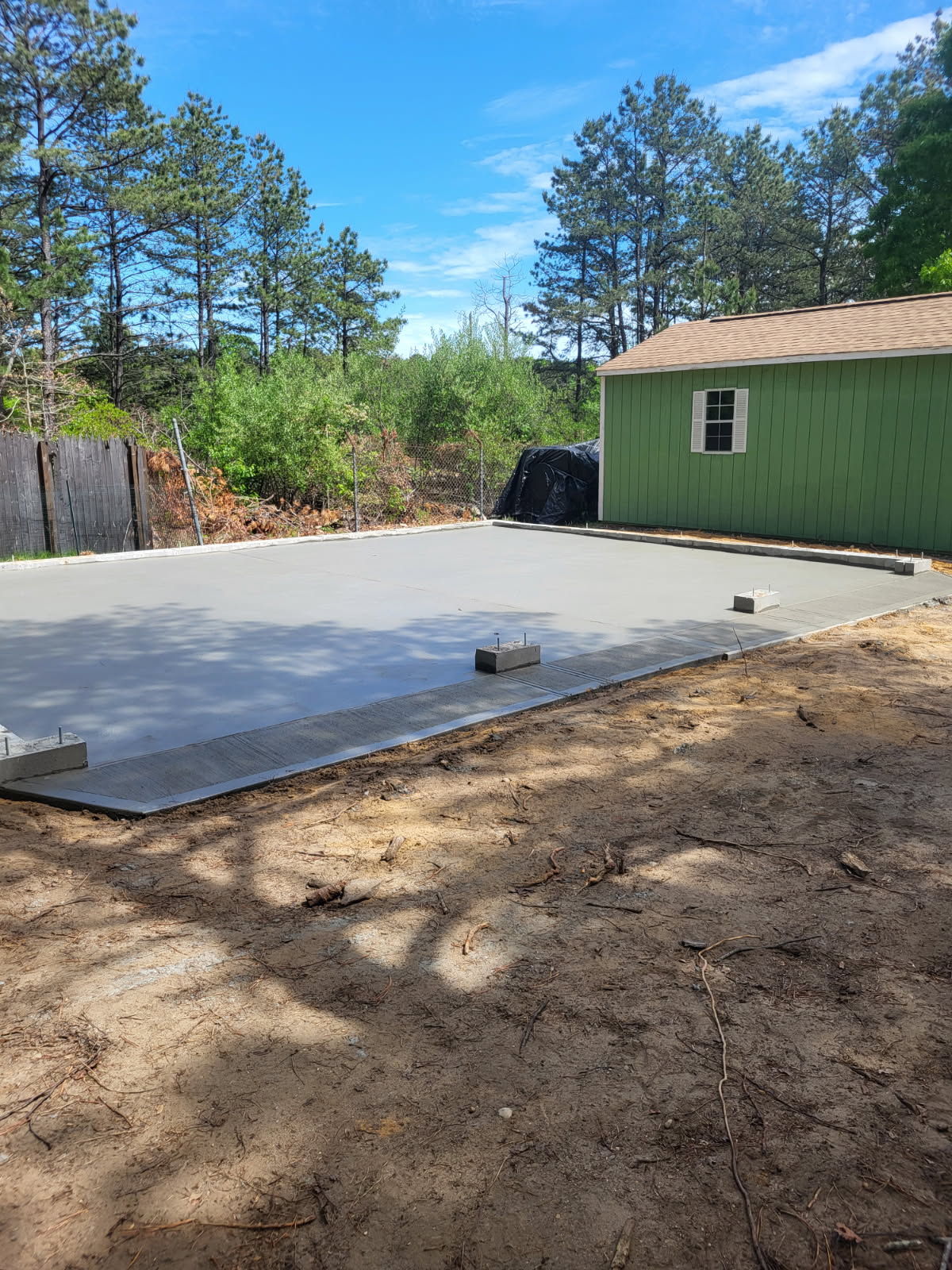
Replacing a driveway in the same footprint and touching the part that meets the street are two different questions. The street-facing apron usually sits in the town right-of-way, and towns like Islip run a separate DPW right-of-way permit for work there. Always confirm with your own town before anyone pours.
Why the apron is the part that trips people up
Most homeowners ask one question: do I need a permit to replace my driveway? The more useful question is where the driveway ends. The last several feet, where your concrete or asphalt meets the town road, usually sit inside the town right-of-way. That strip belongs to the town, not to you, even though you mow next to it and shovel it every winter.
Because it is town property, work there is often handled by the highway or public works department instead of the building department. The Town of Islip publishes a separate application for exactly this: a Department of Public Works Right-of-Way Permit, which you can read at https://islipny.gov/community-and-services/documents/departments/public-works-dpw/59-right-of-way-permit-application/file. That is a different form, a different department and a different review than a building permit.
So you can end up in a situation where the part of the driveway inside your property line raises no questions at all, and the last eight feet near the curb does. Nobody warns you about that until the work is already scheduled.
What Brookhaven's permit page actually says — and doesn't
Brookhaven is the town most of our Suffolk County customers live in, and its public permit page is where people go first. That page lists examples like fence, covered porch, deck, in-ground pool, and alterations or repairs. You can see it at https://www.brookhavenny.gov/602/Permits.
Here is the honest part: driveways and patios are not named on that list. That absence is not the same as permission. It means the page does not answer the question, and the only way to get a real answer for your address is to call the Brookhaven Building Division and describe the job you are actually doing.
We tell every customer the same thing. Do not take a contractor's word for it, including ours, and do not take a neighbor's word for it. Confirm requirements directly with your town before work starts.
Grading, drainage and added impervious surface
A driveway is not only a surface. It is a grade and a drainage plan. If you are raising a low spot, cutting a slope down, or widening a driveway so more water runs somewhere new, you have moved past a simple like-for-like replacement.
Brookhaven has a grading chapter in its town code at https://ecode360.com/8592928 and land development standards at https://ecode360.com/8599085. Either can bear on regrading or on how much of a lot is covered by hard surface. We are not lawyers and we will not tell you how those chapters apply to your property — but they exist, they are public, and they are worth naming when you call the building department.
The practical version: if water currently runs toward the street and your new layout sends it toward a neighbor's yard or your own foundation, that is a design problem and possibly a code problem. Fix it on paper before anyone mixes concrete. Our notes on planning a new concrete driveway in Suffolk or Nassau cover the layout side of this.
Every town on Long Island runs its own rules
There is no single Long Island driveway permit. Brookhaven, Islip, Huntington, Babylon and Smithtown each run their own building department, and the Nassau County towns run theirs. Incorporated villages inside those towns often add another layer with their own building inspector.
Islip, for example, publishes detailed residential building permit requirement sheets for additions, exterior alterations, accessory structures and decks at https://islipny.gov/community-and-services/documents/departments/planning-development/building-division/471-building-permit-requirements-residental-additions-interior-exterior-alterations-accessory-structures-and-decks/file. The level of documentation one town expects can be very different from the town five miles away.
So when someone tells you "you never need a permit for a driveway on Long Island," they are describing one town, one job, and possibly one year. Ask about your address.
Questions worth asking your building department
Call with a short, specific list. You will get a clearer answer in five minutes than from an hour of searching.
Am I expanding the footprint, or replacing in the same lines? Am I changing the grade or elevation? Does the work touch the apron or the town right-of-way, and if so which department handles that? Am I adding drainage, a drywell or a curb cut? Is there a separate right-of-way or street-opening permit, and what does it cost? Are there limits on how much of my lot can be hard surface?
Write down who you spoke to and what they told you. That record is worth having if a question comes up later.
How we handle this on a Forte job
Forte Brick and Concrete is family owned and operated and has been doing this since 1981. Andrew Capogna is on site for every project, and he walks the job with you on the first visit. He will tell you what he sees on the ground — where water goes, where the grade needs to change, where the work gets close to the street — so you know which questions to bring to your town.
What we will not do is tell you a permit is unnecessary. The permit is between the homeowner and the town, and the rules differ by address. Our part is handling the work start to finish, from that first visit through final cleanup, and building the driveway, patio, walkway or slab to the layout we agreed on.
If you are planning concrete driveway, patio or slab work in Suffolk or Nassau County, call (631) 974-5285 or use the quote form. Every project is quoted on site. We also offer a senior citizen discount.
Frequently asked questions
Do I need a permit to replace my driveway in Suffolk County?
It depends on your town and on what you are changing. A same-footprint replacement is treated differently than widening, regrading or work at the apron. Brookhaven's public permit page does not name driveways, so call your building department and confirm for your address.
What is a right-of-way permit?
It is permission to work in the strip of land the town owns along the road, which usually includes the apron where your driveway meets the street. The Town of Islip publishes a separate Department of Public Works right-of-way permit application for this kind of work.
Who pulls the permit, me or the contractor?
Towns differ on who may apply. The responsibility for the property sits with the homeowner, so confirm with your building department who they require on the application before work is scheduled.
Does a paver driveway follow different rules than concrete?
The surface material matters less than the footprint, the grade and the amount of hard surface you are adding. Ask your town about those three things regardless of whether you choose pavers or poured concrete.
Do you work in Nassau County too?
Yes. We serve Suffolk County and Nassau County. Nassau's towns and villages run their own building departments, so the same advice applies: confirm requirements with the department that covers your address.