Resurfacing fixes the top layer. Replacement fixes what is under it. If the damage is surface-deep — light spalling, scaling from salt, crazing, a worn finish — a resurface can work. If cracks run full depth, sections have settled against each other, or the slab moves underfoot, the base has failed and the concrete needs to come out.
What is the actual difference between resurfacing and replacement?
Resurfacing means bonding a new wear layer over the existing slab. The old concrete stays where it is and keeps doing the structural work. You are buying back the appearance and the texture of the surface, nothing more.
Replacement means breaking out the old concrete, correcting the base underneath it, and pouring new. It costs more and takes longer, and it is the only option that fixes a problem that lives below the surface.
So the deciding question is not how bad it looks. It is where the damage is. A driveway can look rough and still be sound, and a driveway can look passable and be sitting on a base that washed out years ago. That is why we look at it in person before anyone talks about a method.
What damage can a resurface genuinely fix?
Surface-only damage is the honest case for resurfacing. That includes light spalling, where small flakes have popped off the top; scaling, where the surface has peeled in sheets after years of de-icing salt; crazing, the fine web of hairline lines that stays on the surface; and a finish that has simply worn smooth and lost its texture.
What these have in common is that the slab underneath is still whole. It sits flat, it does not rock, the edges are intact, and any cracks in it are tight and shallow.
Our site FAQ puts it the same way we do on a driveway: small cracks can often be repaired, while heavily broken or sunken sections usually need replacing. Freeze-thaw cycles, standing water, salt and age are what drive most of it on Long Island — the same cycle we wrote about in how Long Island winters damage concrete.
What are the three conditions that mean the slab has to come out?
First, cracks that run full depth. If a crack goes all the way through and the two sides have separated or sit at different heights, the slab has already broken into pieces. A coating over the top will crack again along the same line, usually within a season or two.
Second, sections that have moved. One panel sitting lower than its neighbor, a lip you catch your foot on, a walkway slab tipped toward the house — that is movement in the ground under the concrete, not a surface problem.
Third, a slab that rocks or sounds hollow underfoot. That means there is a void beneath it. Put a new surface on it and you have a thin layer spanning open air, which is the fastest way to crack new work.
Crumbling edges belong on this list too. When the perimeter of a driveway or walkway is breaking away in chunks, there is usually nothing solid left to bond a resurface to at exactly the place it is most exposed.
Why do slabs sink in Suffolk County?
Most of the time it is the base. If the original slab was poured over soil that was never properly compacted, or over fill that settled, the concrete eventually follows it down. Sandy soil moves when water moves through it, and plenty of older driveways out here were poured on very little prepared base.
Water is the second cause. A downspout dumping at the edge of a driveway, a grade that pitches back toward the house, or a low spot where puddles stand after every storm will wash fines out of the base over years. The concrete does not fail first — the ground under it does.
Freeze-thaw is the third. Water gets into an existing crack, freezes, expands, and widens it. Then more water gets in. Salt makes it worse by increasing how often the surface goes through the freeze cycle. That is how a hairline crack becomes a full-depth break and how a sound surface becomes spalled. We cover the driveway version of this in detail in fixing a cracked driveway.
What do the repair options actually involve?
Crack repair: we clean out the crack, prepare the edges and fill it so water stops getting in. This is maintenance, not restoration — it buys time on a sound slab and keeps a small problem from becoming a structural one.
Section replacement: we saw out the damaged panel, correct the base beneath it, and pour new concrete in that area only. This works well when the rest of the slab is in good shape and the damage is confined to one or two sections.
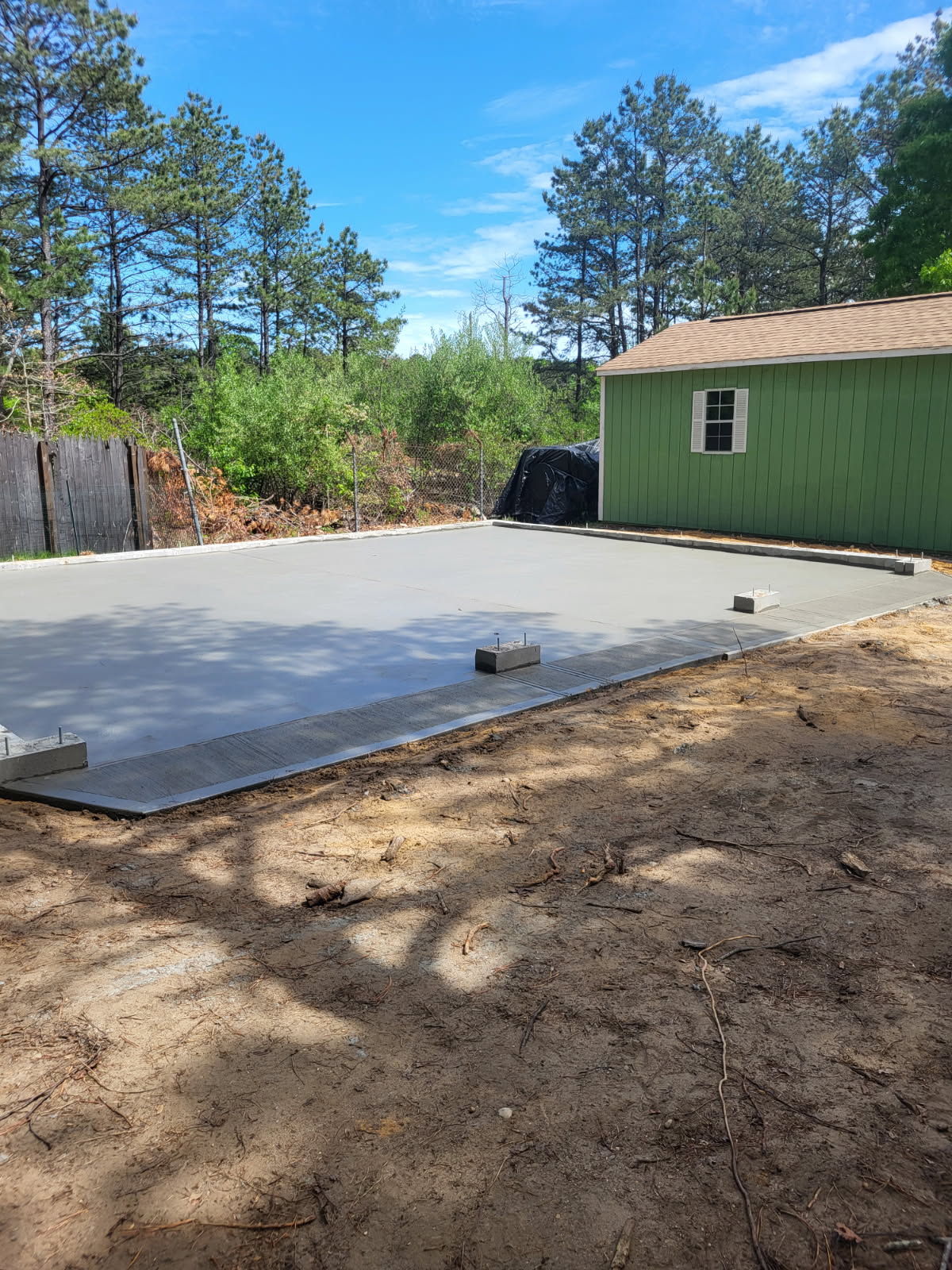
Full replacement: the old concrete comes out, the base is dug, graded and compacted, and the new slab is poured on proper support. It is the most work and it is the only approach that resets the clock on both the surface and what is under it.
All of that falls under our concrete repairs work — crack repair, spalled surfaces and damaged sections on driveways, walkways, steps, patios and slabs.
What do you give up by resurfacing a slab that should be replaced?
You give up the money twice. A resurface on a failing base will crack along the same lines as the slab underneath, and when it does you still have to pay for the replacement you were trying to avoid. Now you also have to remove the overlay.
You also give up your window on the drainage. The time to fix pitch, correct a low spot or move water away from a foundation is while the concrete is out. Once new material is bonded on top, the grade is locked in at whatever it was.
Resurfacing is a good answer to a specific problem. It is a bad answer to a different problem wearing the same clothes. Anyone who looks at a sunken, rocking driveway and quotes a coating is not doing you a favor.
Why does drainage decide how long the new work lasts?
New concrete poured over the same drainage problem fails the same way the old concrete did, just a few years later. Before we pour anything, we want to know where water goes during a heavy rain — off the slab and away from the house, or into the base.
That can mean adjusting the pitch, extending a downspout, regrading the soil along the edges, or changing where a walkway meets a driveway so water has somewhere to go. None of it is glamorous and all of it is the difference between a slab that lasts and one that does not.
If you are keeping the existing concrete, the same thinking applies on a smaller scale. Sealing cracks and keeping water out of the base is the single most useful thing a homeowner can do between now and the next freeze. Our seasonal maintenance checklist walks through the rest.
How does Forte decide which one you need?
Andrew comes out and looks at it. He checks whether the cracks go through, whether sections have moved relative to each other, whether the slab is solid underfoot and where water runs after a storm. Then he tells you what he sees, including when the honest answer is that a repair will hold and you do not need a new driveway.
Andrew is on every job, from the first visit through the final cleanup. Forte Brick and Concrete is family owned and operated and has been doing masonry and concrete work on Long Island since 1981. We work throughout Suffolk and Nassau County.
To get a look at yours, call (631) 974-5285 or use the quote form. We offer a senior citizen discount, and every project is quoted on site.
Frequently asked questions
Can you replace one section instead of the whole driveway?
Often, yes. If the damage is confined to one or two panels and the rest of the slab is sound and sitting level, we can saw out the bad section, fix the base beneath it and pour new concrete there. If sections are moving in several places, you are usually better off replacing the whole thing at once.
Will a repair match the existing concrete?
Not exactly. New concrete cures to a different shade than concrete that has been down for years, and it will stay noticeably lighter for a while before it weathers closer. We can match the finish and the joint pattern, but we will tell you up front that the color will differ.
How long before I can walk or drive on new concrete?
Foot traffic and driving are two different timelines, and both depend on the mix, the thickness and the weather at the time of the pour. We give you the specific hold times for your job before we leave the site, because rushing a slab is one of the easier ways to damage new work.
Is a repair always cheaper than replacement?
Up front, yes. Over the life of the slab, only if the repair matches the problem. Crack repair or a section replacement on a sound base is good value. A surface repair on a slab that has settled or broken through is money spent twice. Every project is quoted on site after we look at it.
Does the damage get worse if I wait a season?
Usually. Open cracks let water into the base, and the freeze-thaw cycle through a Long Island winter widens them. Something that could be sealed in October can be a replacement by spring. If you are unsure, it costs nothing to have us look before the cold sets in.